
About the author
Sarah Mitchell
Pest & Plant Health Writer
Sarah writes about integrated pest management, disease symptoms, and pet-safe gardening. She consults extension publications and keeps a reference garden for photographing real-world plant problems.
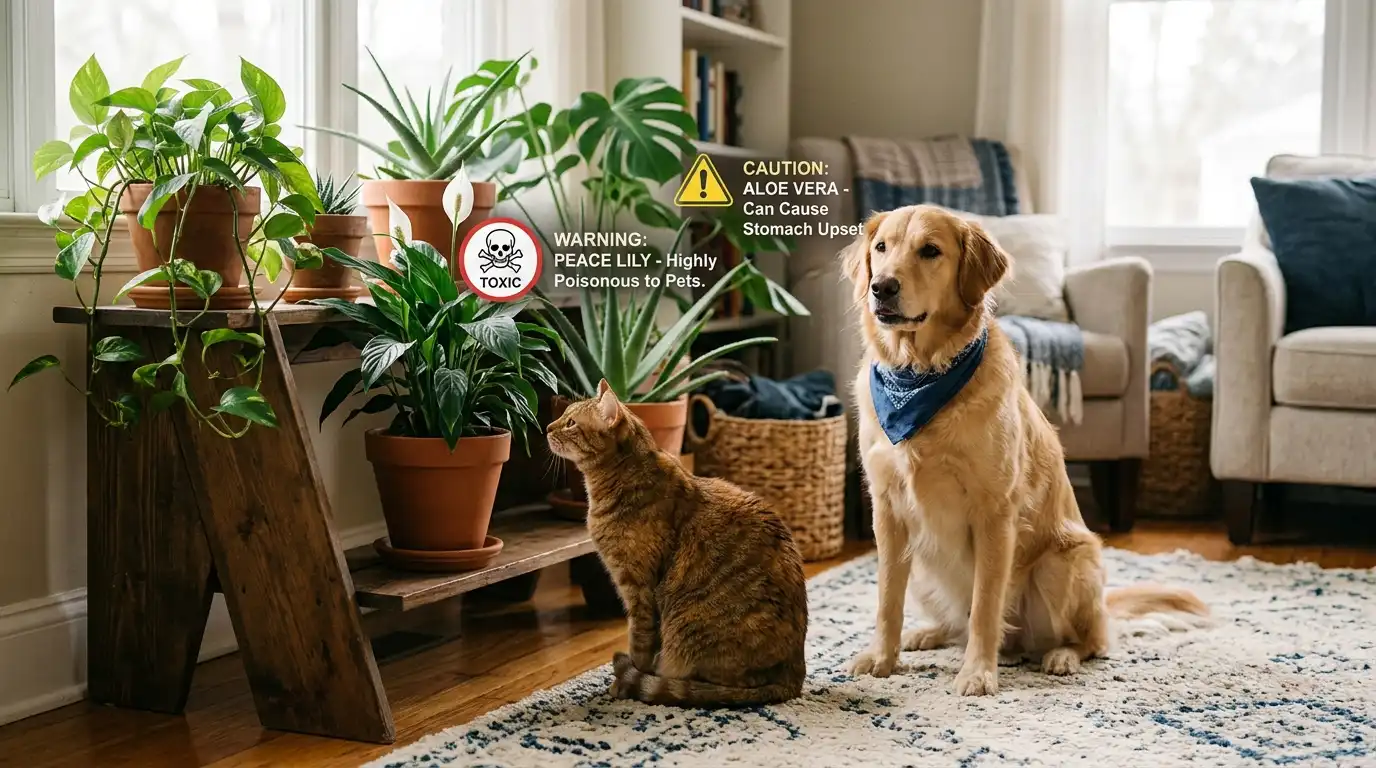
"Many popular houseplants contain compounds that can make cats and dogs sick. The top offenders in homes today include pothos, peace lily, ZZ plant, philodendron, monstera, and dieffenbachia. Know which 15 to avoid and which pet-safe swaps to choose instead.
If your pet chews a toxic plant, you may see drooling, vomiting, or mouth irritation. The ASPCA poison control list is the go-to reference; we have aligned this list with their guidance. Before bringing any plant home, confirm its identity with the ePlant AI identifier and check toxicity in our encyclopedia. For safe options, see our toxic plants and safe alternatives guide.
15 Houseplants to Avoid With Cats and Dogs
- Pothos (Epipremnum aureum) – Calcium oxalate crystals; mouth and stomach upset. Safe swap: spider plant, peperomia.
- Peace lily (Spathiphyllum) – Same irritants; toxic to cats and dogs. Safe swap: Boston fern, African violet.
- ZZ plant (Zamioculcas zamiifolia) – All parts; gastrointestinal irritation. Safe swap: cast-iron plant, parlor palm.
- Philodendron – Calcium oxalate in leaves and stems. Safe swap: Calathea, prayer plant.
- Monstera (Monstera deliciosa) – Irritant sap; keep out of reach. Safe swap: areca palm, majesty palm.
- Dieffenbachia (dumb cane) – Highly irritating; swelling and pain. Safe swap: Chinese evergreen (Aglaonema) – some cultivars are safer; check ASPCA.
- Sago palm (Cycas revoluta) – Extremely toxic; liver failure possible. Avoid entirely. Safe swap: parlor palm, areca palm.
- Snake plant (Sansevieria) – Saponins; nausea and vomiting. Safe swap: Boston fern, spider plant.
- Jade plant (Crassula ovata) – Toxic to cats and dogs. Safe swap: Haworthia, echeveria (still keep out of reach).
- Aloe vera – Latex under the skin is toxic. Safe swap: Haworthia.
- English ivy (Hedera helix) – Gastrointestinal upset. Safe swap: Swedish ivy (Plectranthus).
- Lilies (true lilies, e.g. Easter lily) – Especially dangerous to cats; kidney failure. Safe swap: orchids, African violet.
- Oleander – All parts highly toxic. Do not keep indoors with pets.
- Cyclamen – Roots and tubers most toxic. Safe swap: African violet.
- Kalanchoe – Cardiac toxins. Safe swap: Christmas cactus, African violet.
When in doubt, check the ASPCA list and use ePlant AI to confirm plant ID before buying. For more options, read our pet-safe succulents and toxic plants and alternatives posts.
Real-World Example: Pothos vs. Spider Plant
Both are trailing green houseplants, but only one is a safe choice for curious cats. Pothos has waxy, heart-shaped leaves with a pointed tip and often shows yellow variegation; chewing it causes oral burning and vomiting because of calcium oxalate crystals. Spider plant has narrow, arching leaves with a pale stripe down the center and produces small plantlets on long stems; it is widely considered non-toxic, though large amounts can still upset a stomach.
Before you buy, photograph the plant at the store and run it through the ePlant AI identifier. Labels are often wrong or use trade names that hide toxicity.
Pro Tip
Place any questionable plant on high shelves or in a room pets cannot access. If you suspect ingestion, contact your vet or the ASPCA Poison Control hotline immediately.
Identify Plants Before You Buy
Snap a photo with ePlant AI to confirm the species and check if it is safe for your pets.
Identify with ePlant AIFrequently Asked Questions
Is pothos toxic to cats?
Yes. Pothos contains calcium oxalate crystals that cause mouth and throat irritation, drooling, and vomiting in cats and dogs. Keep it out of reach or choose a pet-safe alternative like spider plant or peperomia.
What if my dog ate a peace lily?
Contact your vet or ASPCA Poison Control right away. Have the plant name ready; use ePlant AI to identify it from a photo if you are not sure. Peace lily causes oral and stomach irritation; early treatment helps.
Are snake plants safe for cats?
No. Snake plant (Sansevieria) contains saponins that can cause nausea, vomiting, and diarrhea in cats and dogs. Choose spider plant, Boston fern, or parlor palm instead, and keep all plants out of reach if your pet is a heavy chewer.