Skip to plant details

SoybeanGlycine max

Also known as Edamame · Gm Soya · Kaḍhelli

  • Category: Vegetable
  • Type: Herb
  • Sunlight: Requires full sun for optimal growth and yield, at least 6-8 hours of direct sunlight daily.
  • Water: Keep soil consistently moist, especially during flowering and pod formation. Avoid waterlogging. Reduce watering as pods mature.
  • Temperature: Thrives in warm temperatures between 20-30 °C. Sensitive to frost.
  • Habitat: Outdoor

Safety note: This plant may be toxic to humans. See toxicity details.

Soybean (Glycine max) is a globally significant annual legume crop, primarily cultivated for its edible beans rich in protein and oil. It thrives in warm climates and ful

Photograph © 葉子 · CC0

Soybean Care Summary

At-a-glance light, water, soil, and growing conditions from plant data

Light

Requires full sun for optimal growth and yield, at least 6-8 hours of direct sunlight daily.

90% intensity

Water

Keep soil consistently moist, especially during flowering and pod formation. Avoid waterlogging. Reduce watering as pods mature.

70% intensity

Soil

Well-drained, fertile loam, pH 6.0-7.0

50% intensity

Temperature

Thrives in warm temperatures between 20-30 °C. Sensitive to frost.

80% intensity

Habitat

Outdoor

50% intensity

Fertilizer

Soybeans are nitrogen-fixing legumes, so they generally require less nitrogen fertilizer. Apply phosphorus and potassium as needed based on soil tests.

40% intensity

Soybean Toxicity

Safety information from plant toxicity data

Toxicity details for Soybean
AttributeValue
Toxic for humansYes

4/5 intensity

Toxic for petsNo

0/5 intensity

EdibleYes

Raw soybeans contain antinutritional factors like trypsin inhibitors and lectins, which can cause digestive upset. These compounds are destroyed by cooking, making processed soybeans safe and nutritious for consumption.

Soybean Quick Facts

Key traits and growing stats from plant data

Plant Type
Herb
Plant Category
Vegetable
Plant Place Type
Ground, Garden, Pot
Plant Environment
Outdoor
Lifespan
Annuals
Plant Height
0.3-1.5 m
Spread
0.3-0.6 m
Growth Rate
Moderate
Leaf Color
Green
Leaf Type
Trifoliate
Flower Size
0.5-0.7 cm
Optimal Sunlight Lux
75000

Care guide for Soybean

Watering, pruning, propagation, and repotting details from plant data

Water

Soybeans require consistent moisture, especially during flowering and pod development. Aim for about 2. 5-4 cm of water per week, either from rainfall or irrigation. Avoid waterlogging, which can lead to root rot.

Reduce watering as the pods mature and begin to dry.
Pruning

Pruning is generally not a standard practice for soybean plants, especially when grown for commercial yield. In a home garden setting, some growers might choose to pinch back the growing tips of young plants.

This can encourage a bushier growth habit and potentially more lateral branching. However, this practice may also slightly reduce the overall bean yield. Focus primarily on providing optimal growing conditions.

Propagation

Soybeans are exclusively propagated by direct sowing seeds. Plant seeds into well-prepared, warm soil after all danger of frost has passed, typically when soil temperatures consistently reach at least 15 °C (59 °F).

Sow seeds approximately 2. 5-5 cm (1-2 inches) deep and space them about 5-10 cm (2-4 inches) apart within rows. Ensure rows are spaced 60-90 cm (24-36 inches) apart for adequate growth.

Repotting

As annual plants, soybeans complete their entire life cycle within a single growing season. Therefore, they do not require repotting.

They are typically grown directly in the ground or in sufficiently large containers from the start.

If cultivating in pots, select containers that are at least 30 cm (12 inches) deep and wide to provide ample space for their root system and support healthy development throughout the season.

Identify plants like this with ePlant

Snap a photo to get care tips and match similar species on the go.

Try for Free

Flowering & Fruiting Cycles

Monthly activity intensity for bloom and fruit across both hemispheres.

Northern hemisphere

Flowering & fruiting calendar

Peak bloom · JulPeak fruit · Sep
FloweringFruiting
02468JanFebMarAprMayJunJulAugSepOctNovDecActivity intensityMonths88
Southern hemisphere

Flowering & fruiting calendar

Peak bloom · SepPeak fruit · Oct
FloweringFruiting
02468JanFebMarAprMayJunJulAugSepOctNovDecActivity intensityMonths78

Soybean Diseases

21 known issues from plant disease data

Soybean cyst nematode in Soybean, on Soybean, Nematode
NematodeDangerous

Soybean cyst nematode in Soybean

Disease type
Nematode
Severity
Dangerous
Affected plant
Soybean

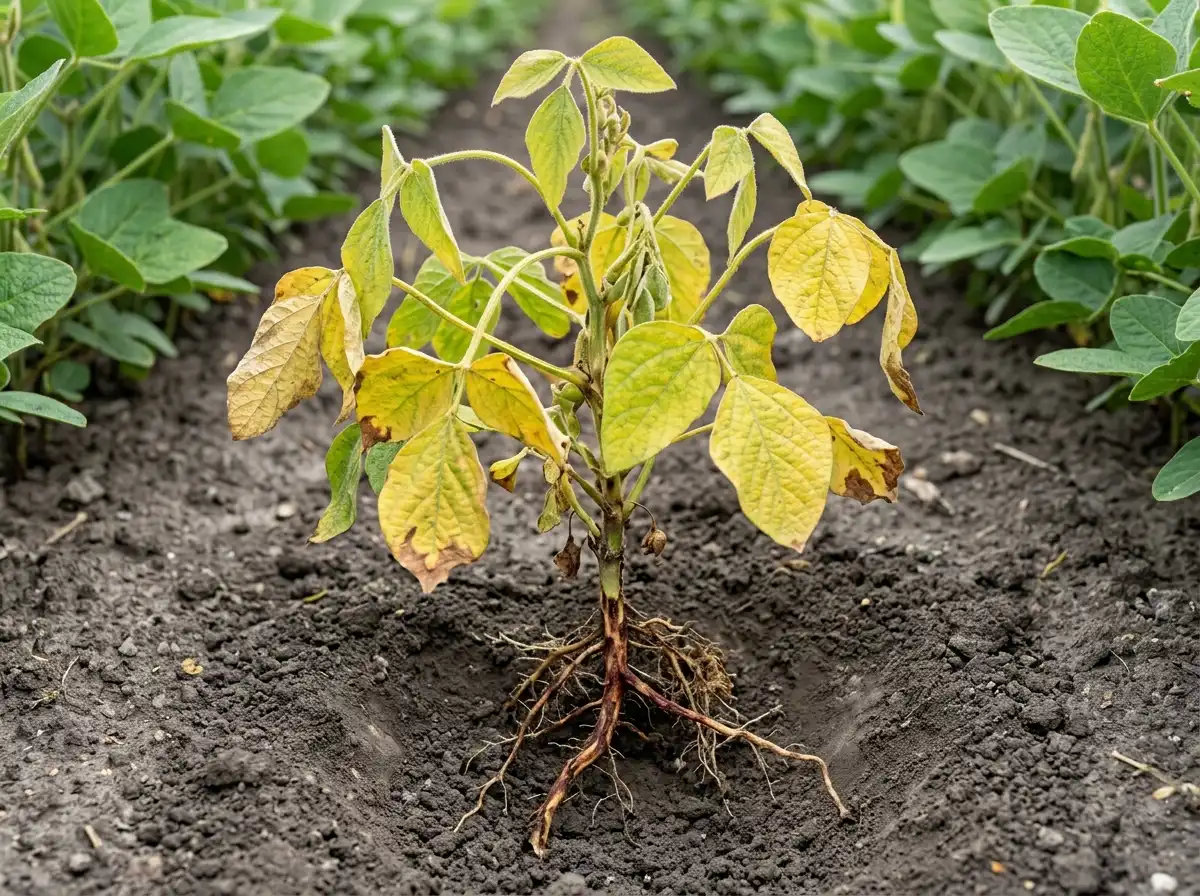
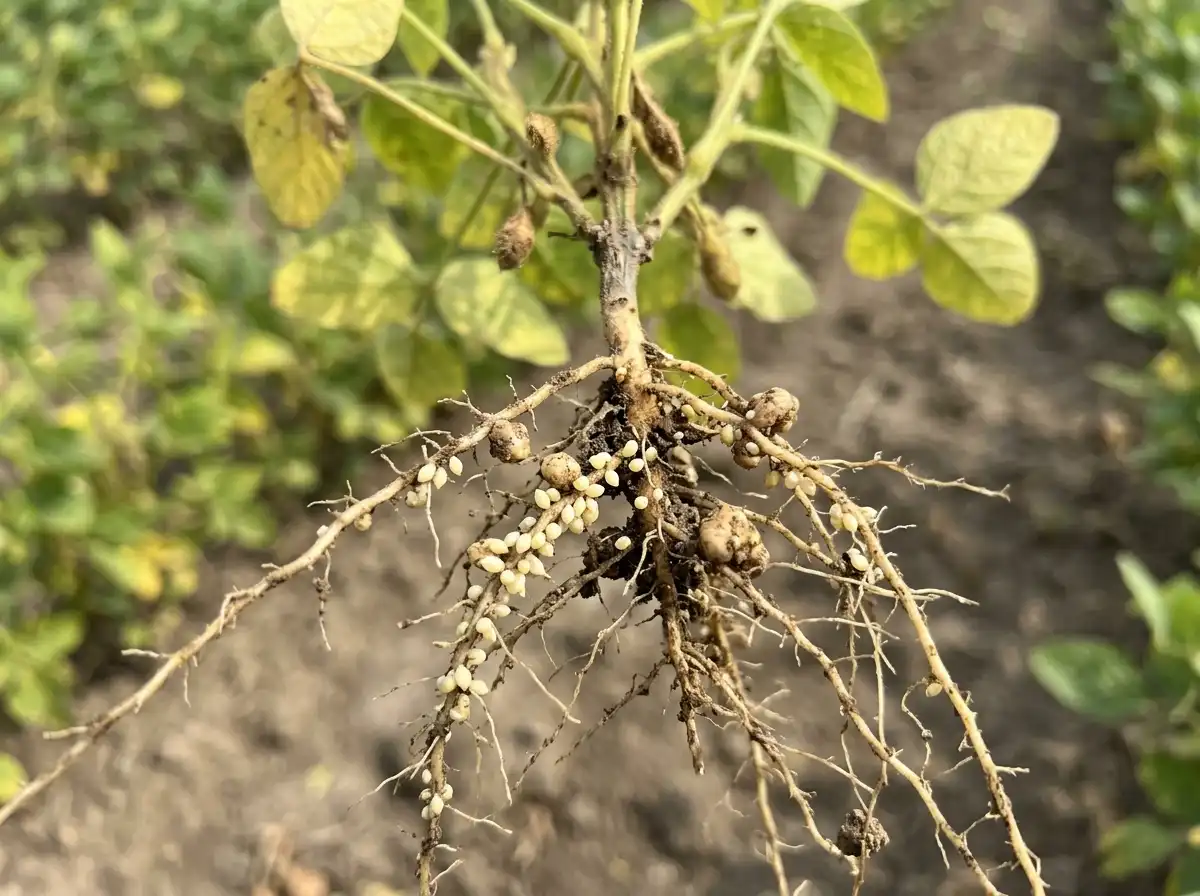
Soybean cyst nematode in Soybean causes stunted plants, yellow leaves, poor vigor, and weak roots that reduce growth and pod filling.

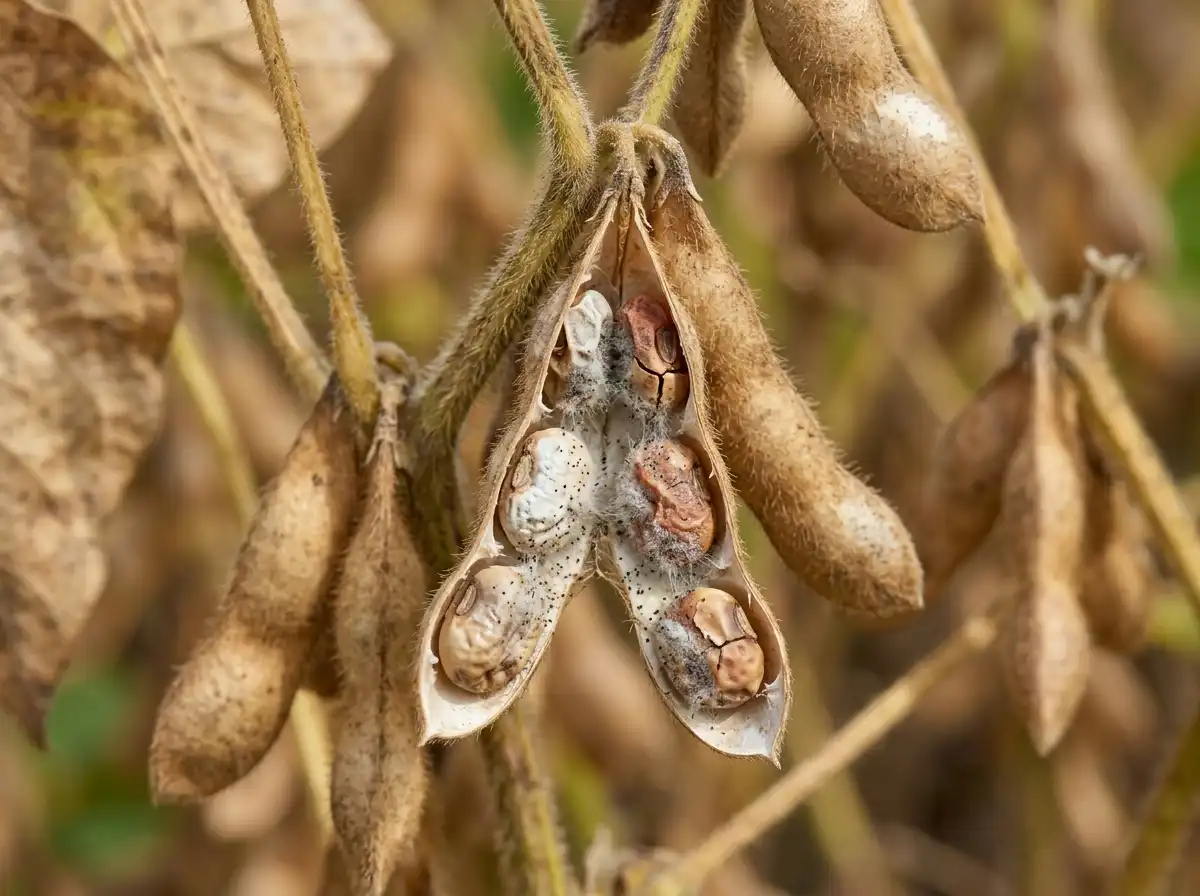
Sudden death syndrome in Soybean, on Soybean, Fungal
FungalDangerous

Sudden death syndrome in Soybean

Disease type
Fungal
Severity
Dangerous
Affected plant
Soybean

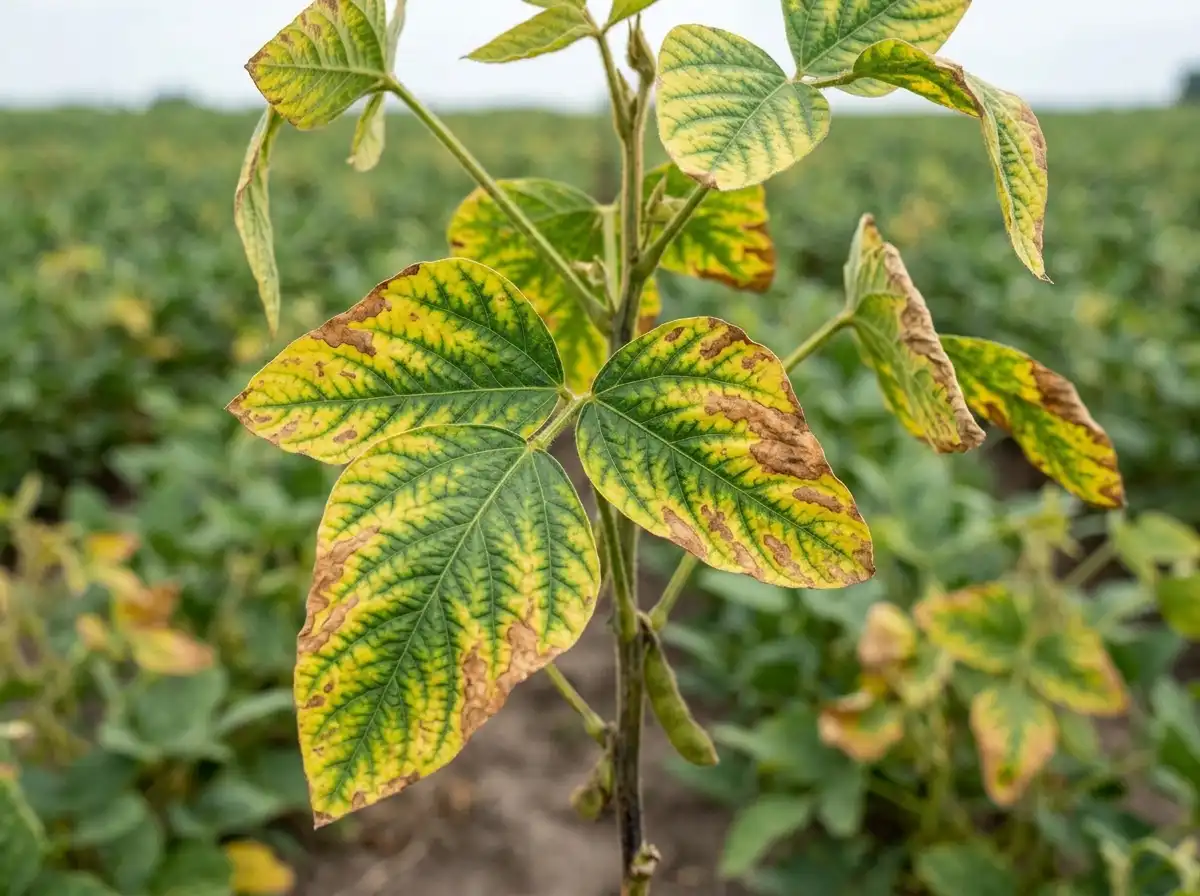
Sudden death syndrome in Soybean causes yellowing and browning between leaf veins while plants may wilt and die before pods fill well.

White mold in Soybean, on Soybean, Fungal
FungalDangerous

White mold in Soybean

Disease type
Fungal
Severity
Dangerous
Affected plant
Soybean

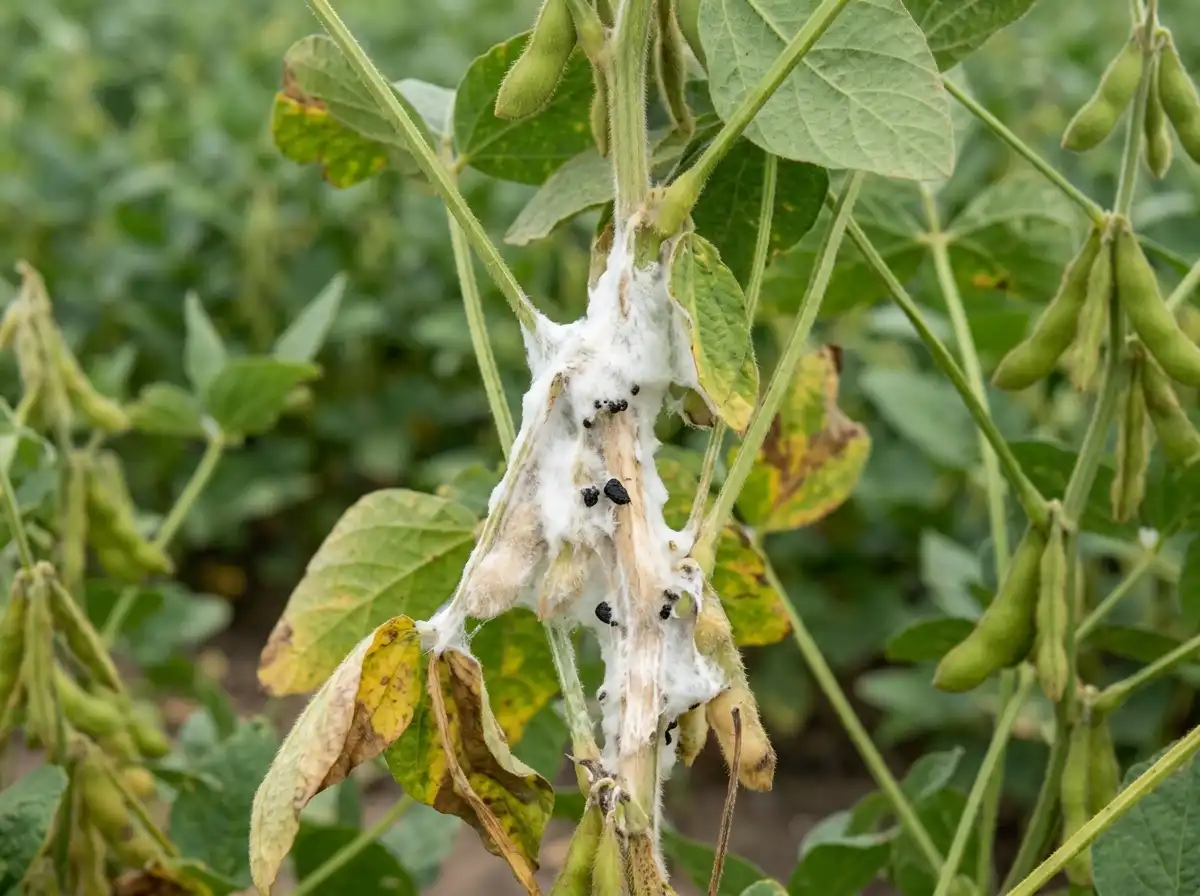
White mold in Soybean causes wilted stems, bleached patches, and cottony growth that leads to rotting plants and poor pod set.

Phytophthora root and stem rot in Soybean, on Soybean, Oomycete
OomyceteDangerous

Phytophthora root and stem rot in Soybean

Disease type
Oomycete
Severity
Dangerous
Affected plant
Soybean

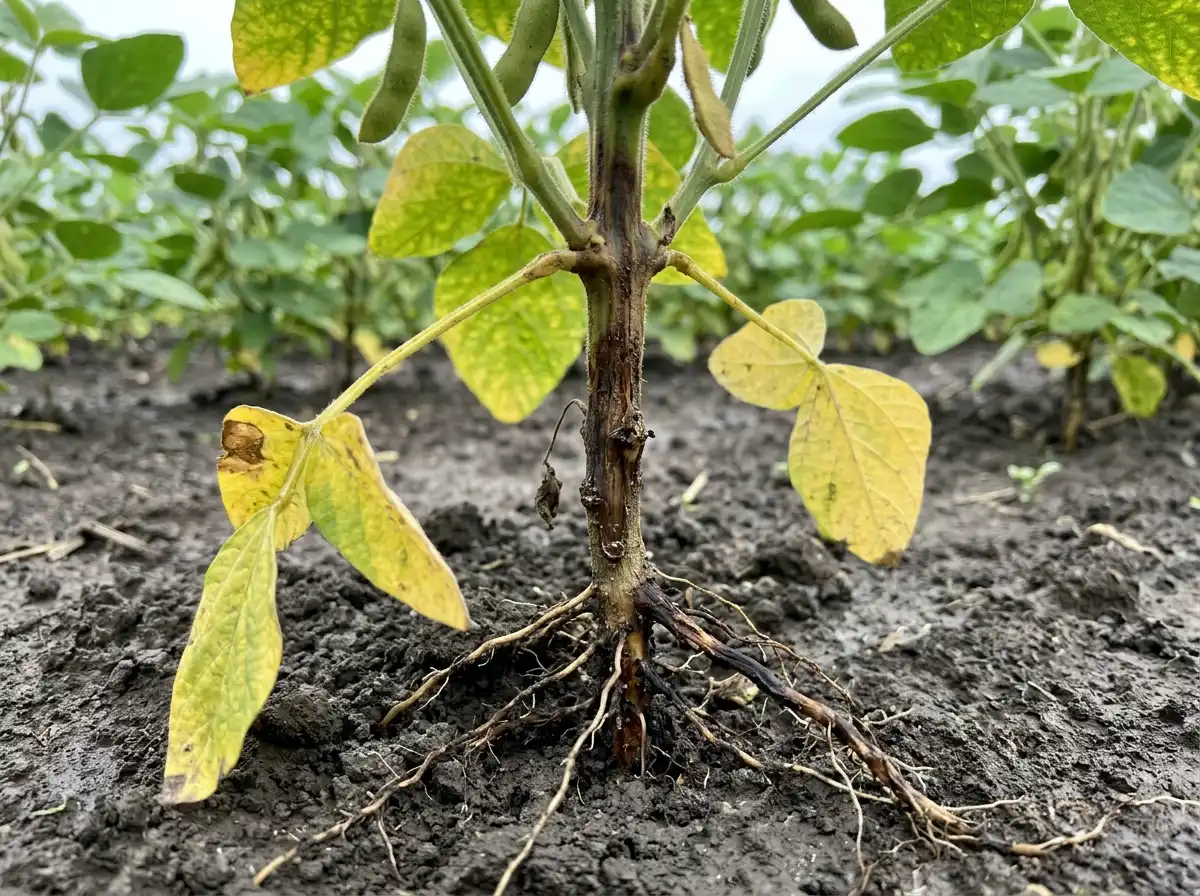
Phytophthora root and stem rot in Soybean causes dark stem lesions, root rot, seedling death, and sudden wilting in wet fields.

Root-knot nematode in Soybean, on Soybean, Nematode
NematodeDangerous

Root-knot nematode in Soybean

Disease type
Nematode
Severity
Dangerous
Affected plant
Soybean

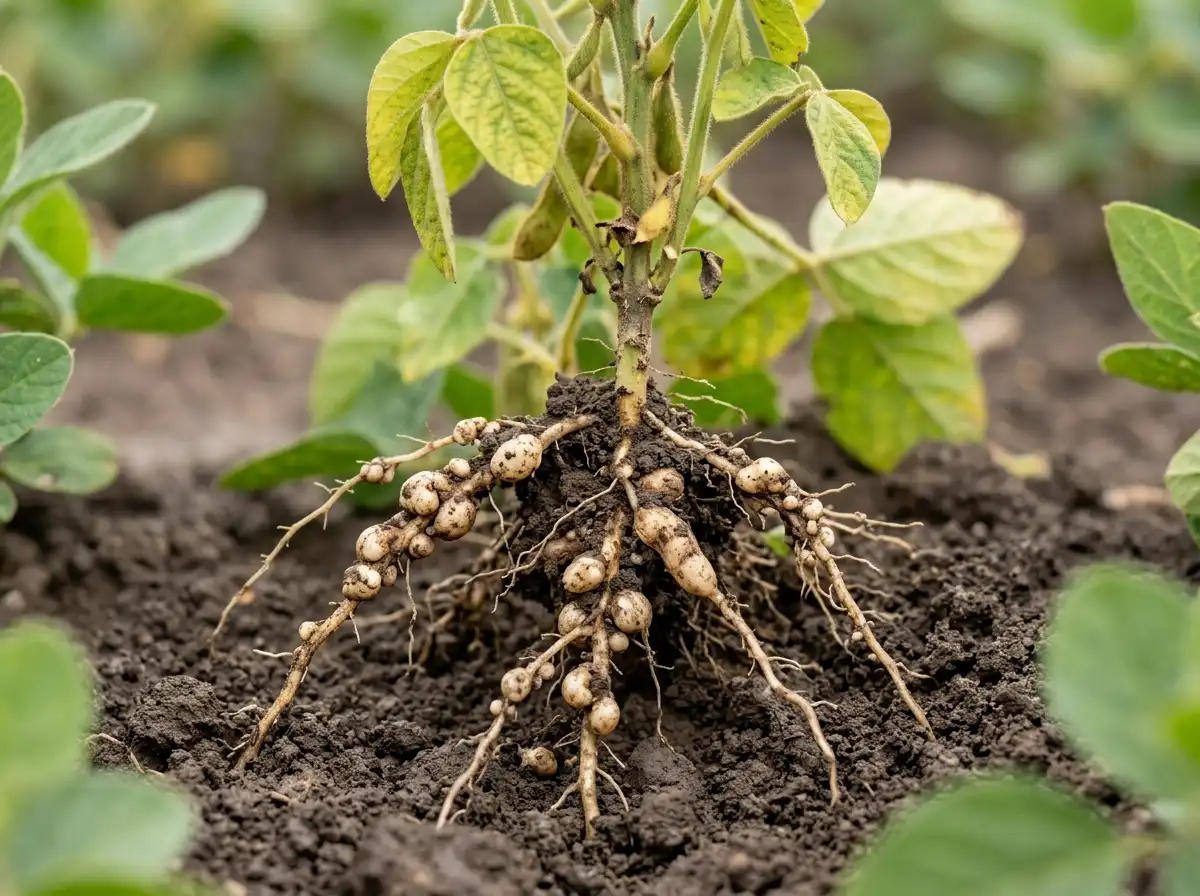
Root-knot nematode in Soybean causes swollen root galls, stunting, yellowing, and reduced plant growth with weaker pod production.

Diaporthe seed decay in Soybean, on Soybean, Fungal
FungalCautious

Diaporthe seed decay in Soybean

Disease type
Fungal
Severity
Cautious
Affected plant
Soybean

Diaporthe seed decay in Soybean causes cracked, shriveled, or poor-quality seed that lowers grain appearance and seed usefulness.

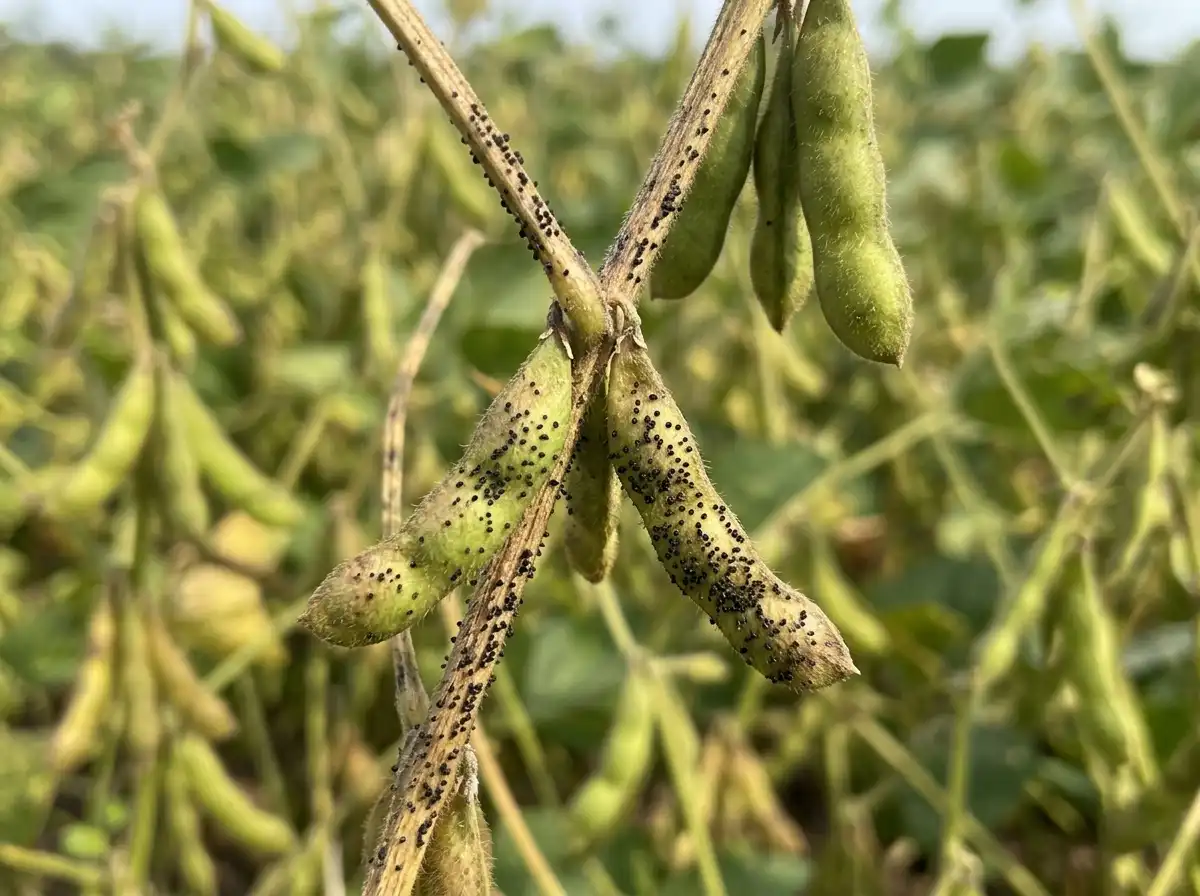
Pod and stem blight in Soybean, on Soybean, Fungal
FungalCautious

Pod and stem blight in Soybean

Disease type
Fungal
Severity
Cautious
Affected plant
Soybean

Pod and stem blight in Soybean causes dark specks on stems and pods, early ripening, and poor seed quality at harvest time.

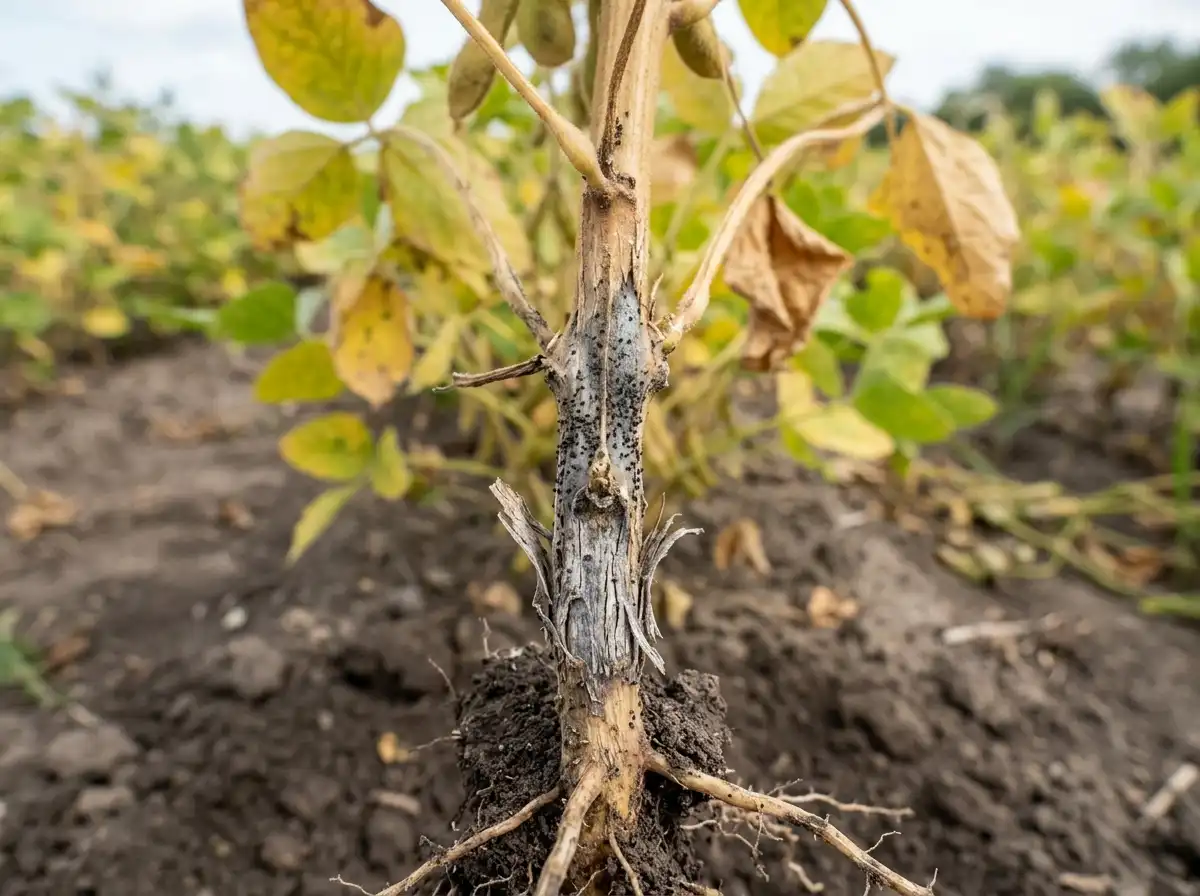
Charcoal rot in Soybean, on Soybean, Fungal
FungalDangerous

Charcoal rot in Soybean

Disease type
Fungal
Severity
Dangerous
Affected plant
Soybean

Charcoal rot in Soybean causes lower stem decay, shredded roots, early wilting, and weak plants during hot, dry conditions.

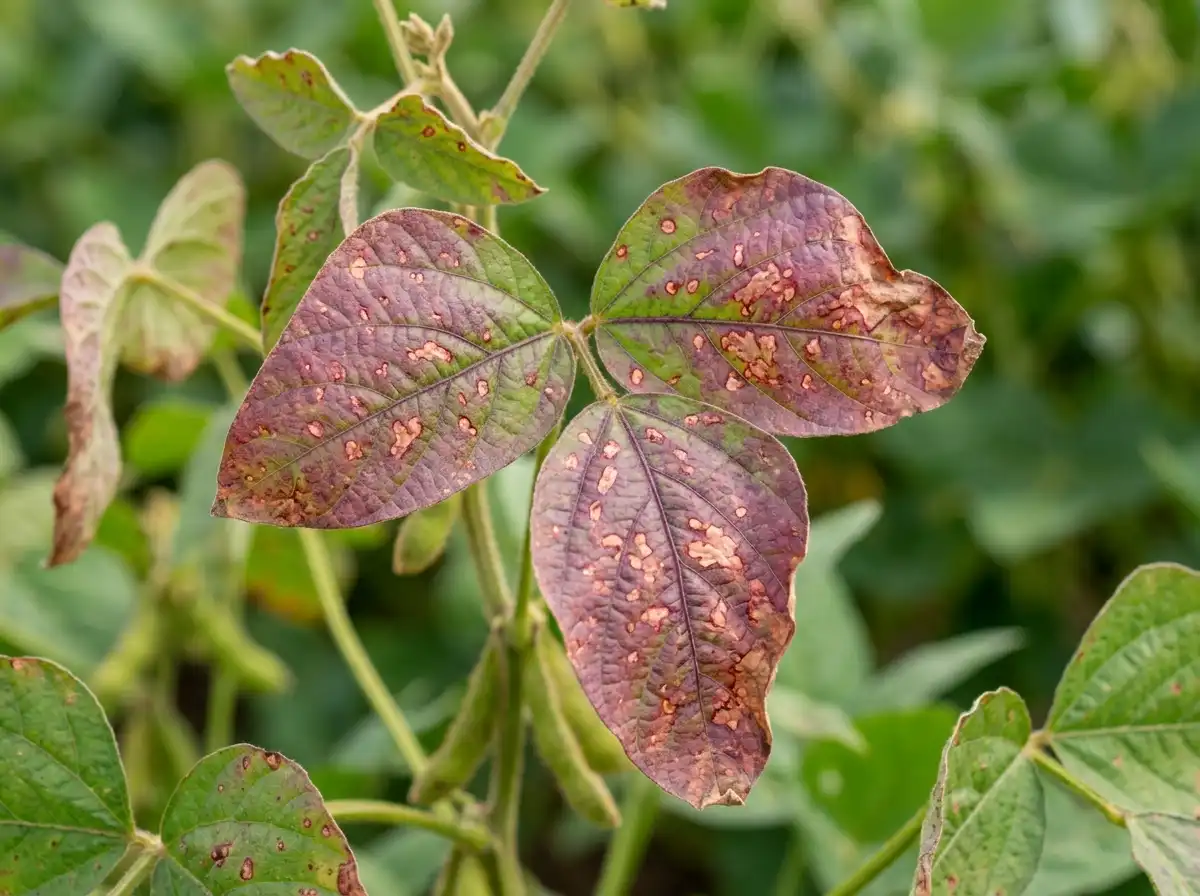
Cercospora leaf blight in Soybean, on Soybean, Fungal
FungalCautious

Cercospora leaf blight in Soybean

Disease type
Fungal
Severity
Cautious
Affected plant
Soybean

Cercospora leaf blight in Soybean causes bronzed or purple upper leaves and can dull seed quality as plants fully mature.

Fusarium root rot and wilt in Soybean, on Soybean, Fungal
FungalCautious

Fusarium root rot and wilt in Soybean

Disease type
Fungal
Severity
Cautious
Affected plant
Soybean

Fusarium root rot and wilt in Soybean causes root decay, yellowing, wilting, and poor stand development in affected fields.

Frogeye leaf spot in Soybean, on Soybean, Fungal
FungalCautious

Frogeye leaf spot in Soybean

Disease type
Fungal
Severity
Cautious
Affected plant
Soybean

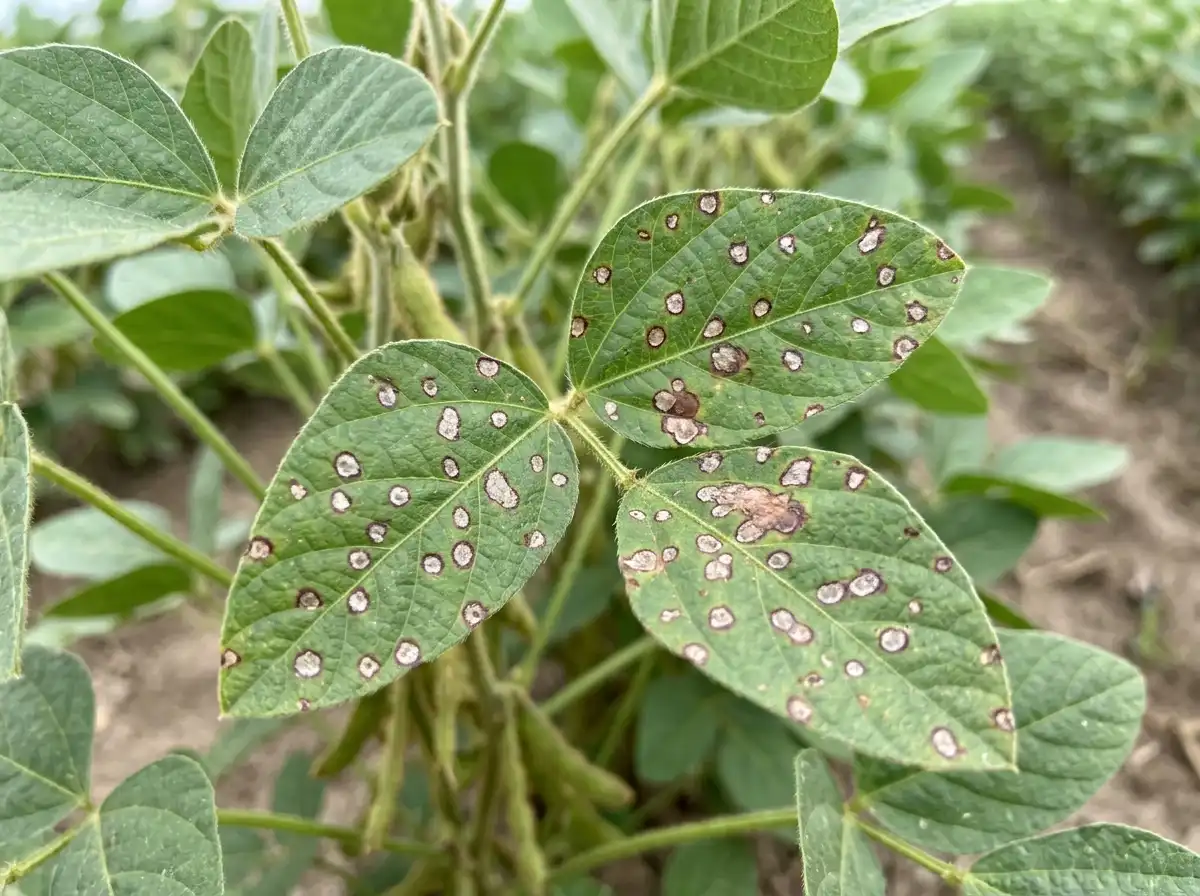
Frogeye leaf spot in Soybean causes round leaf spots with pale centers and dark edges that can reduce healthy leaf area.

Stem canker in Soybean, on Soybean, Fungal
FungalCautious

Stem canker in Soybean

Disease type
Fungal
Severity
Cautious
Affected plant
Soybean

Stem canker in Soybean causes sunken stem lesions, leaf wilting, and premature plant death that cuts yield across field patches.

Septoria brown spot in Soybean, on Soybean, Fungal
FungalNormal

Septoria brown spot in Soybean

Disease type
Fungal
Severity
Normal
Affected plant
Soybean

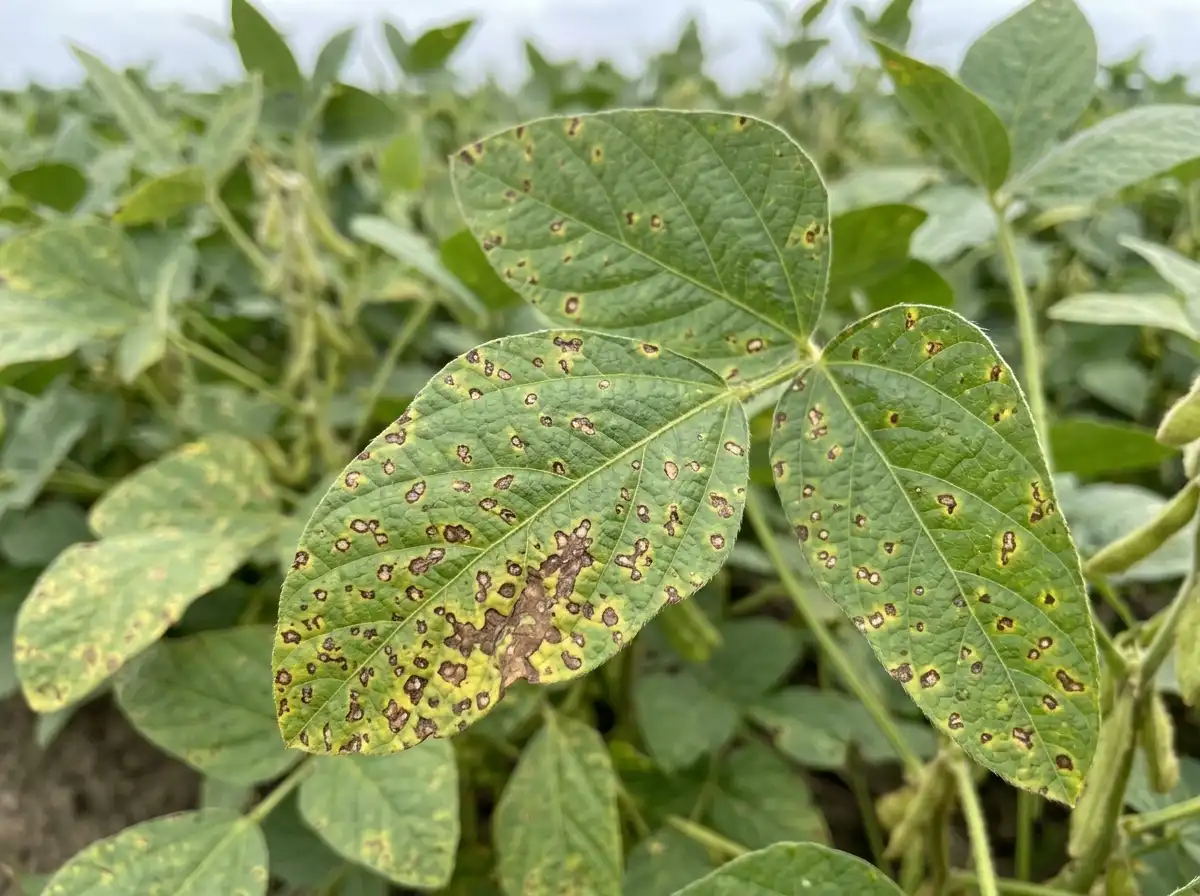
Septoria brown spot in Soybean causes small brown leaf spots that begin low in the canopy and spread upward with defoliation.

Brown stem rot in Soybean, on Soybean, Fungal
FungalCautious

Brown stem rot in Soybean

Disease type
Fungal
Severity
Cautious
Affected plant
Soybean

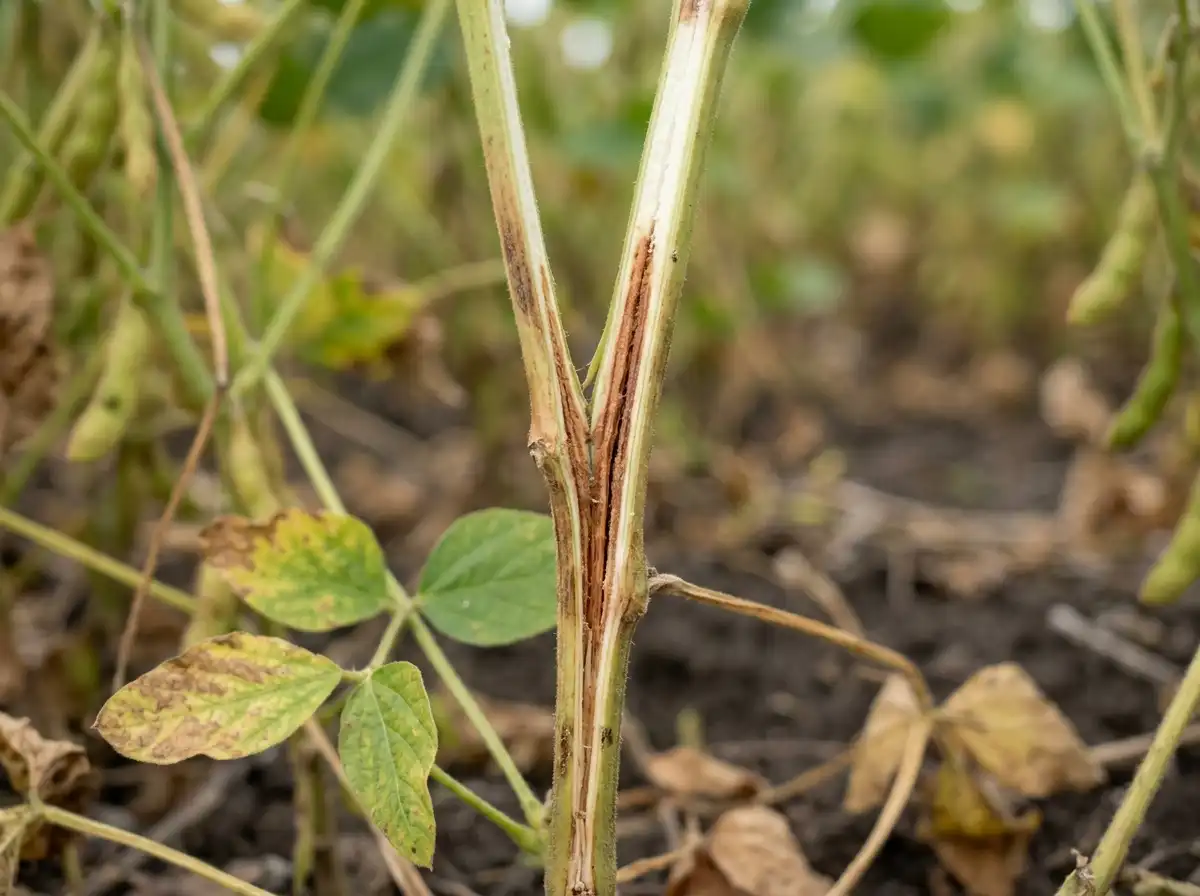
Brown stem rot in Soybean causes browning inside stems, leaf scorch, and reduced vigor that may look worse late in season.

Purple seed stain in Soybean, on Soybean, Fungal
FungalNormal

Purple seed stain in Soybean

Disease type
Fungal
Severity
Normal
Affected plant
Soybean

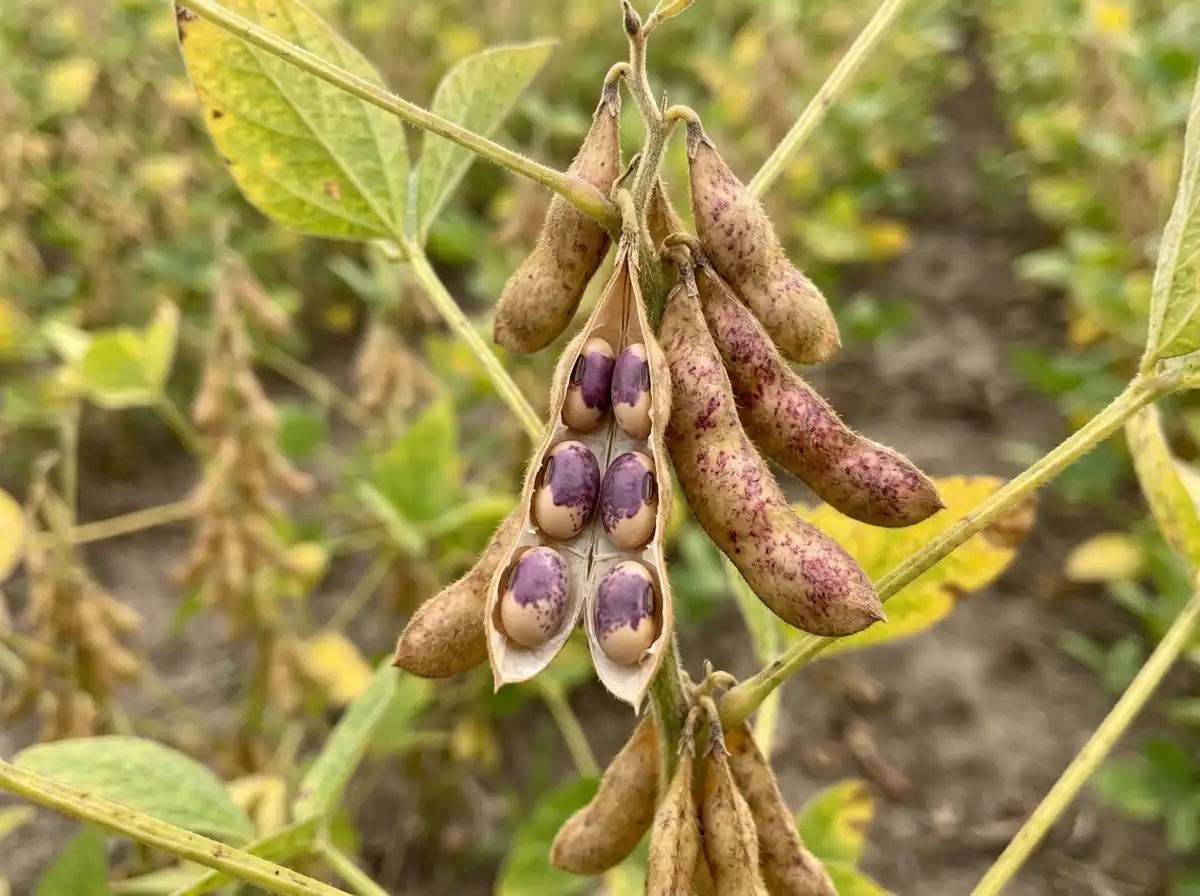
Purple seed stain in Soybean causes purple discoloration on seed coats, lowering seed appearance and grain market quality.

Soybean mosaic in Soybean, on Soybean, Viral
ViralCautious

Soybean mosaic in Soybean

Disease type
Viral
Severity
Cautious
Affected plant
Soybean

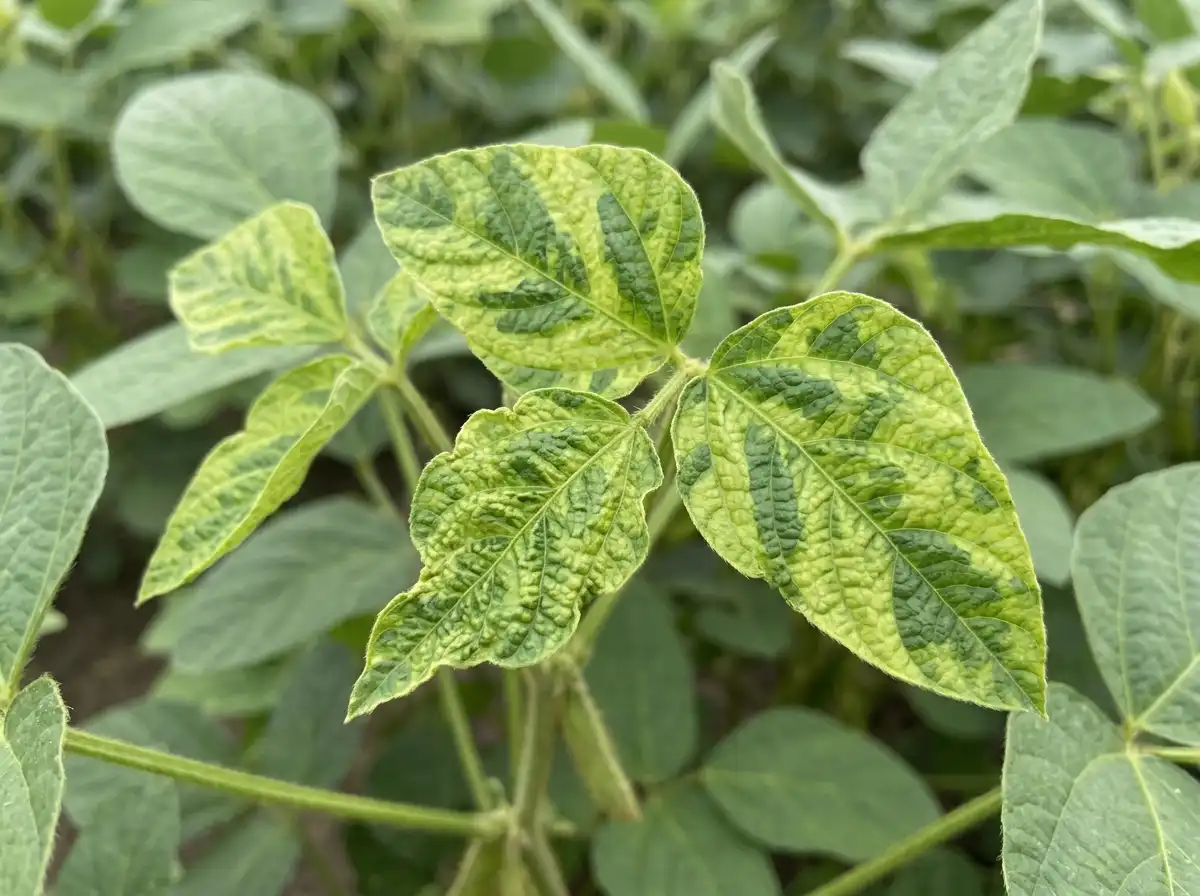
Soybean mosaic in Soybean causes mottled, puckered leaves, uneven growth, and fewer normal pods on infected field plants.

Bean pod mottle in Soybean, on Soybean, Viral
ViralCautious

Bean pod mottle in Soybean

Disease type
Viral
Severity
Cautious
Affected plant
Soybean

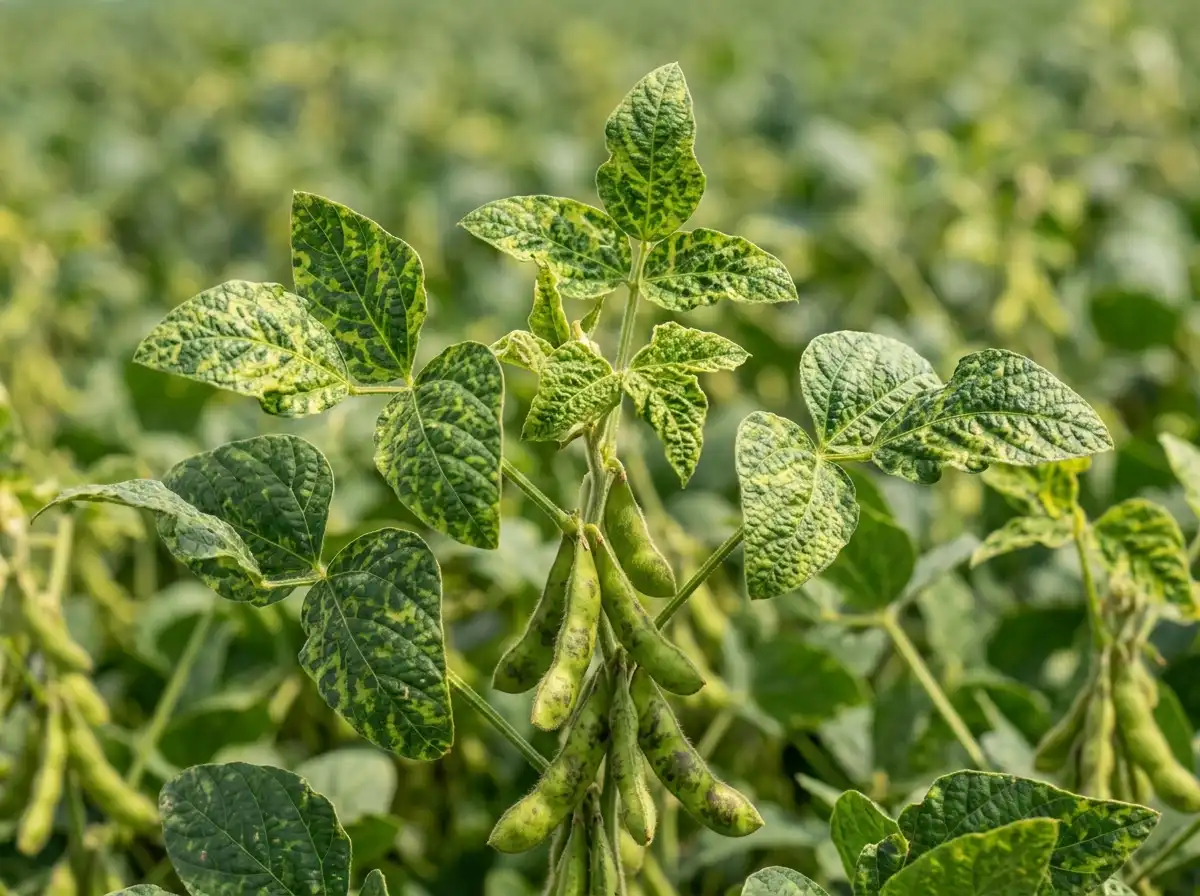
Bean pod mottle in Soybean causes mottled leaves, misshapen pods, and seed with blotchy discoloration and reduced quality.

Downy mildew in Soybean, on Soybean, Oomycete
OomyceteNormal

Downy mildew in Soybean

Disease type
Oomycete
Severity
Normal
Affected plant
Soybean

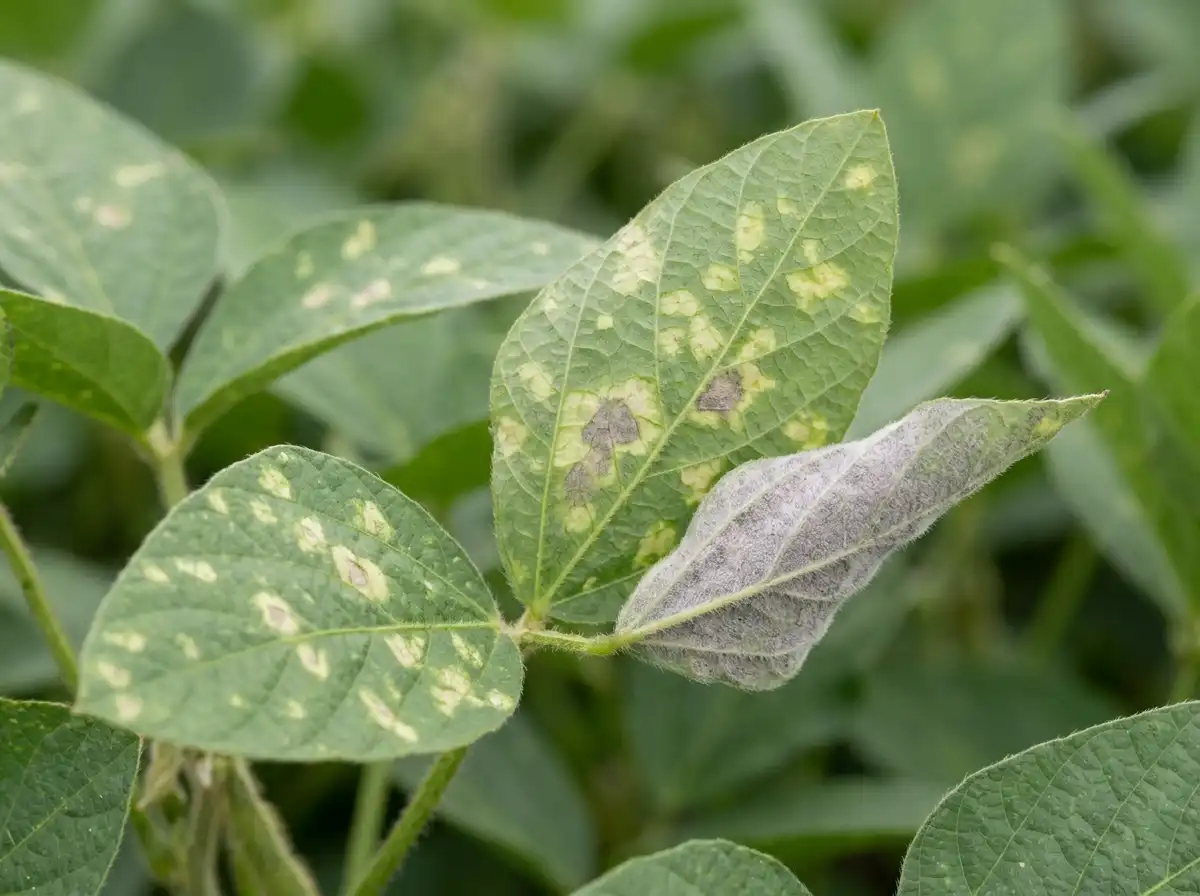
Downy mildew in Soybean causes pale yellow leaf spots with grayish growth underneath and reduced leaf quality late in season.

Bacterial blight in Soybean, on Soybean, Bacterial
BacterialNormal

Bacterial blight in Soybean

Disease type
Bacterial
Severity
Normal
Affected plant
Soybean

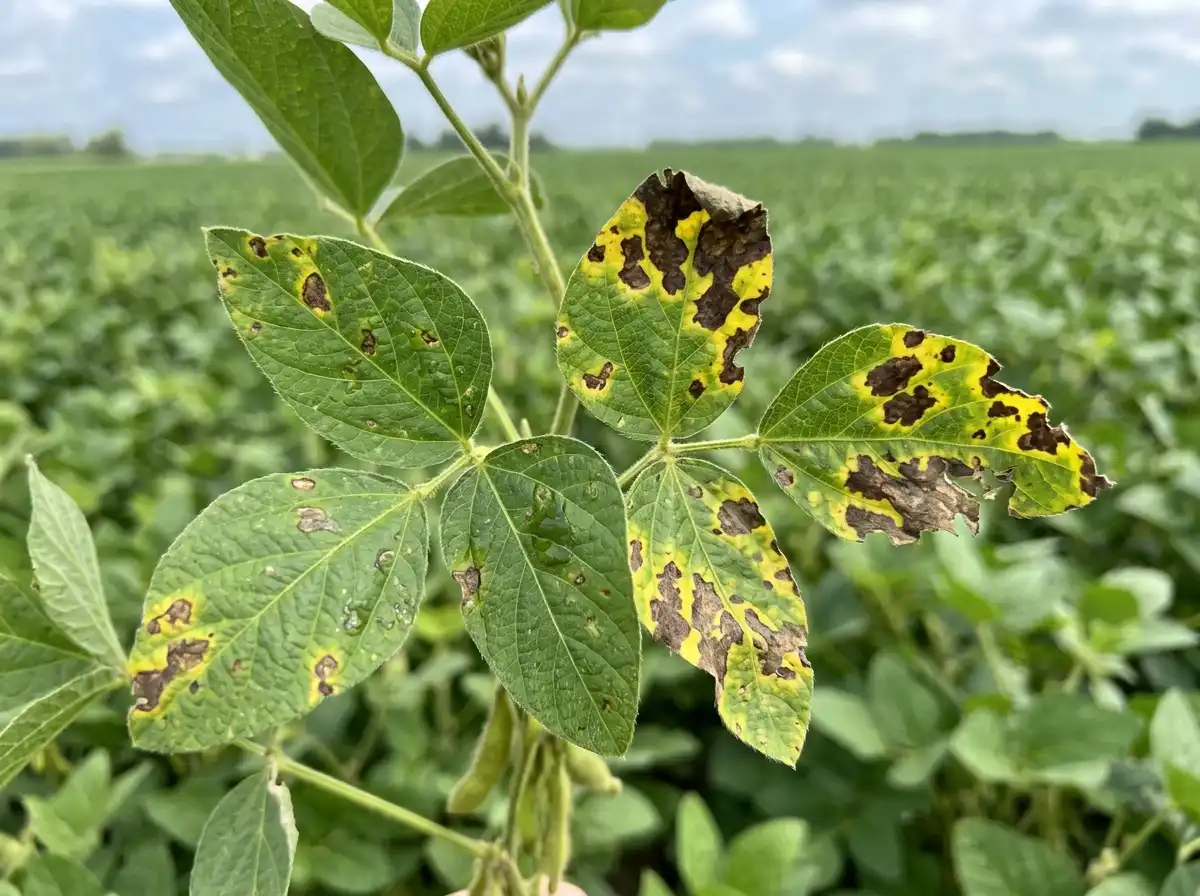
Bacterial blight in Soybean causes water-soaked leaf spots that turn brown and tear, leaving ragged foliage after storms.

Anthracnose stem blight in Soybean, on Soybean, Fungal
FungalCautious

Anthracnose stem blight in Soybean

Disease type
Fungal
Severity
Cautious
Affected plant
Soybean

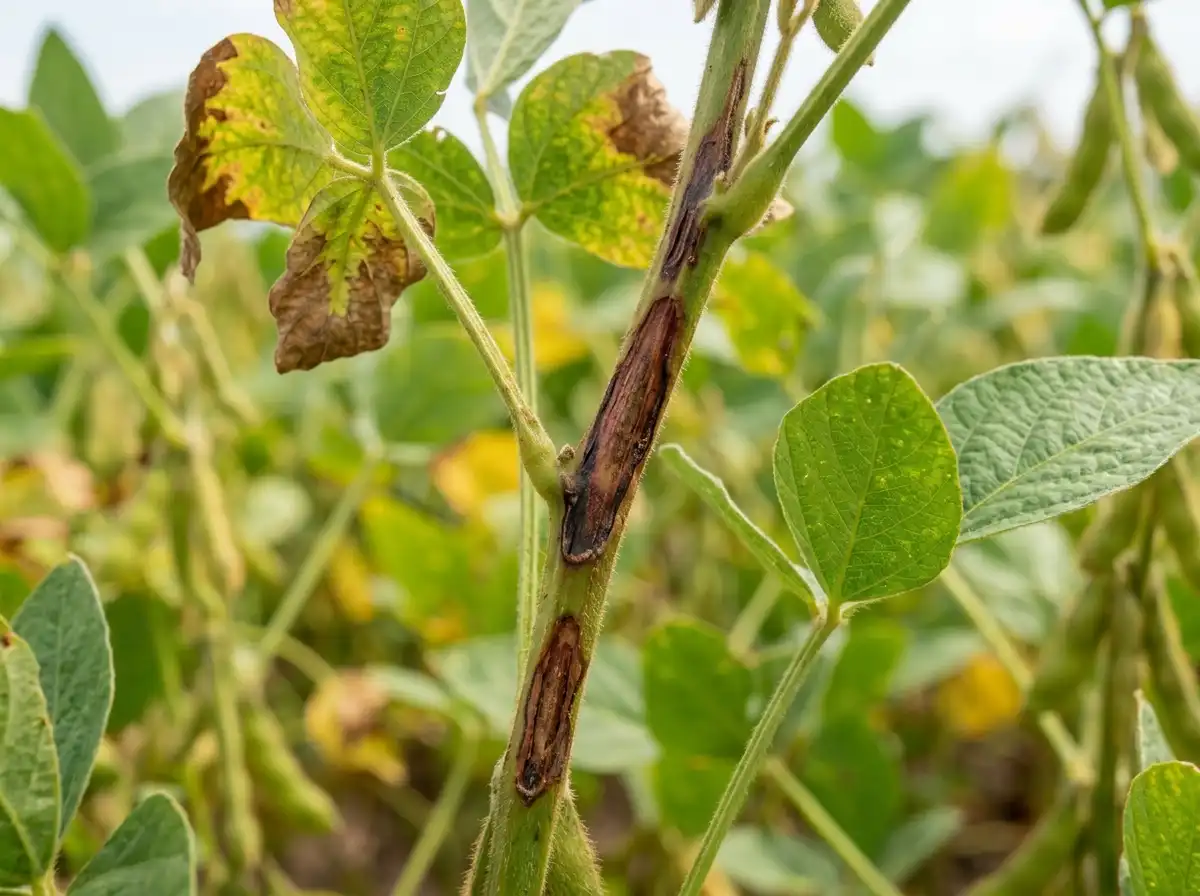
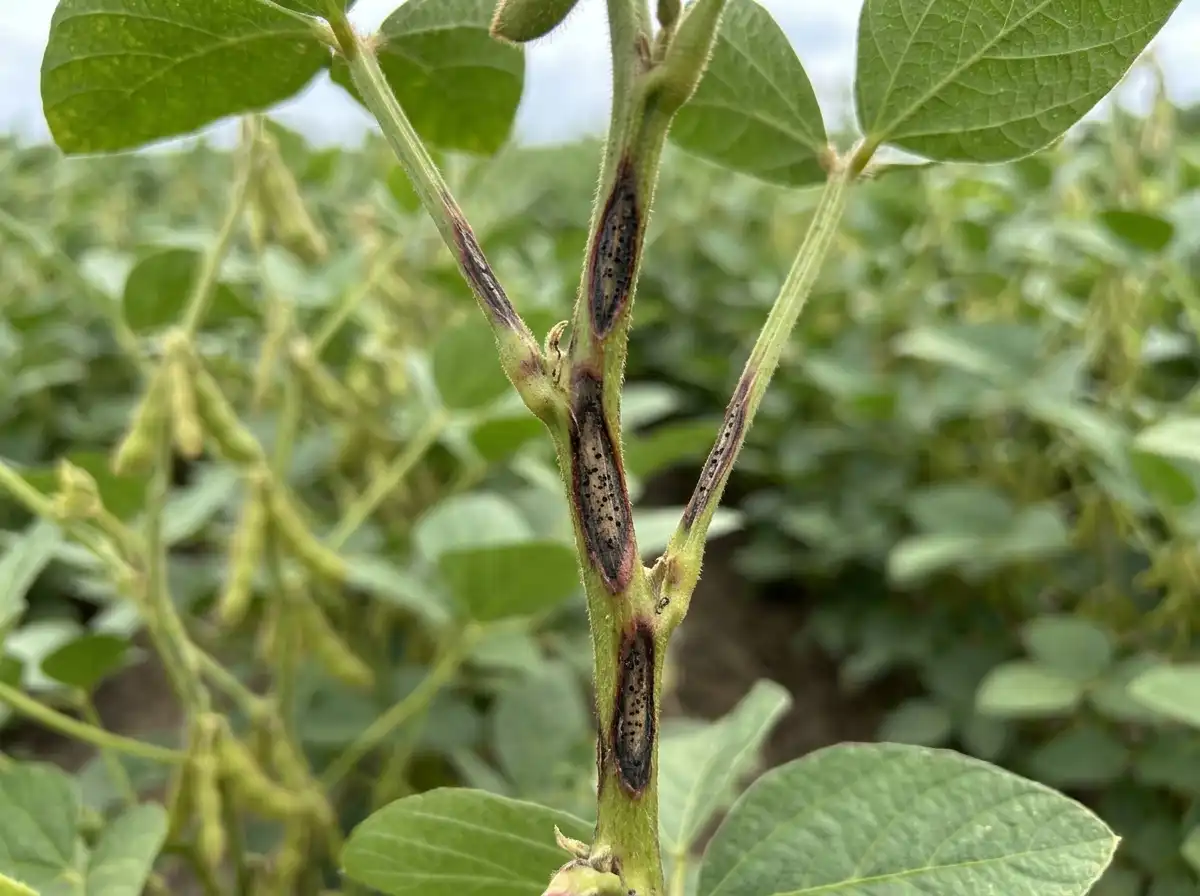
Anthracnose stem blight in Soybean causes dark stem streaks, petiole damage, and poor pod fill on weakened field plants.

Soybean rust in Soybean, on Soybean, Fungal
FungalDangerous

Soybean rust in Soybean

Disease type
Fungal
Severity
Dangerous
Affected plant
Soybean

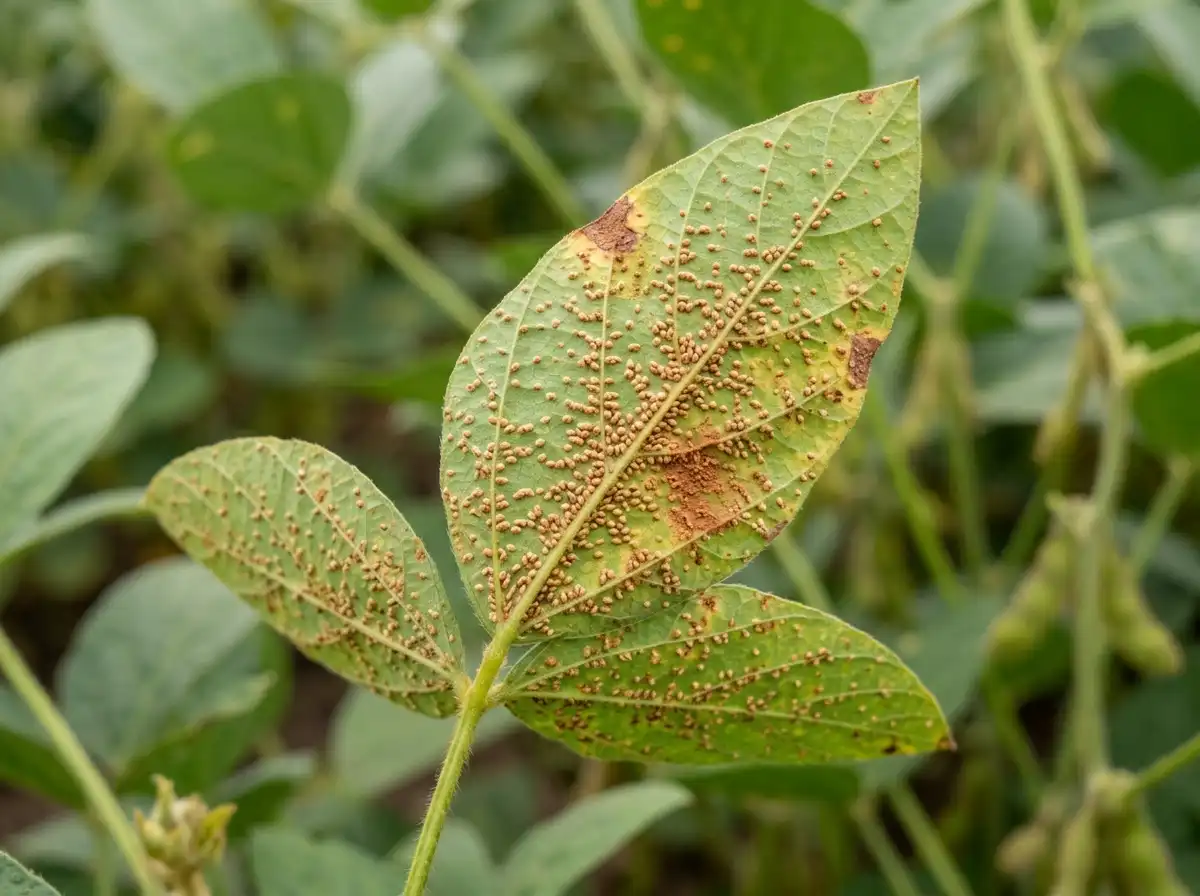
Soybean rust in Soybean causes tiny leaf lesions and pustules that lead to yellowing, early leaf drop, and lower yield loss.

Soybean Names & Synonyms

Common names and botanical synonyms

Common Names

  • Edamame
  • Gm Soya
  • Kaḍhelli
  • Kedelé
  • Reseeding Soybean
  • Soja
  • Soja Bean
  • Sojabohne
  • Soy
  • Soya
  • Soya-Bean
  • Soybean
  • Soybean (german: Soyabohne)
  • Soybeans
  • Wild Soybean
  • सोआबीन
  • सोयाबीन

Synonyms

  • Phaseolus max L.
  • Soja max (L.) Piper

Soybean Taxonomy

Botanical classification

Taxonomic classification of Soybean
RankName
kingdomPlantae
divisionTracheophyta
classMagnoliopsida
orderFabales
familyFabaceae
genusGlycine
speciesGlycine max

Soybean FAQs

Answers based on plant encyclopedia data

How do I grow soybeans in a home garden?

Plant soybean seeds directly into well-drained, fertile soil after the last frost, ensuring full sun exposure. Keep the soil consistently moist, especially during flowering and pod development. Harvest green pods for edamame or allow them to dry for mature beans.

What are the ideal soil conditions for soybeans?

Soybeans thrive in well-drained, fertile loam soil with a pH between 6.0 and 7.0. Good soil structure is important for root development and water penetration. They can tolerate a range of soil types but perform best in rich, organic-matter-rich soils.

Are soybeans edible raw?

No, raw soybeans contain antinutritional factors like trypsin inhibitors and lectins, which can cause digestive upset and interfere with nutrient absorption. Soybeans must be cooked or processed (e.g., fermented into tempeh or made into tofu) to be safely consumed.

How do soybeans contribute to soil health?

Soybeans are legumes, meaning they have a symbiotic relationship with nitrogen-fixing bacteria in their root nodules. These bacteria convert atmospheric nitrogen into a form usable by plants, enriching the soil with nitrogen and reducing the need for synthetic fertilizers.

When is the best time to harvest soybeans?

For edamame, harvest pods when they are plump, bright green, and immature, typically in late summer. For dry beans, allow the pods to fully mature on the plant, turning brown and dry, usually in early autumn, before harvesting.